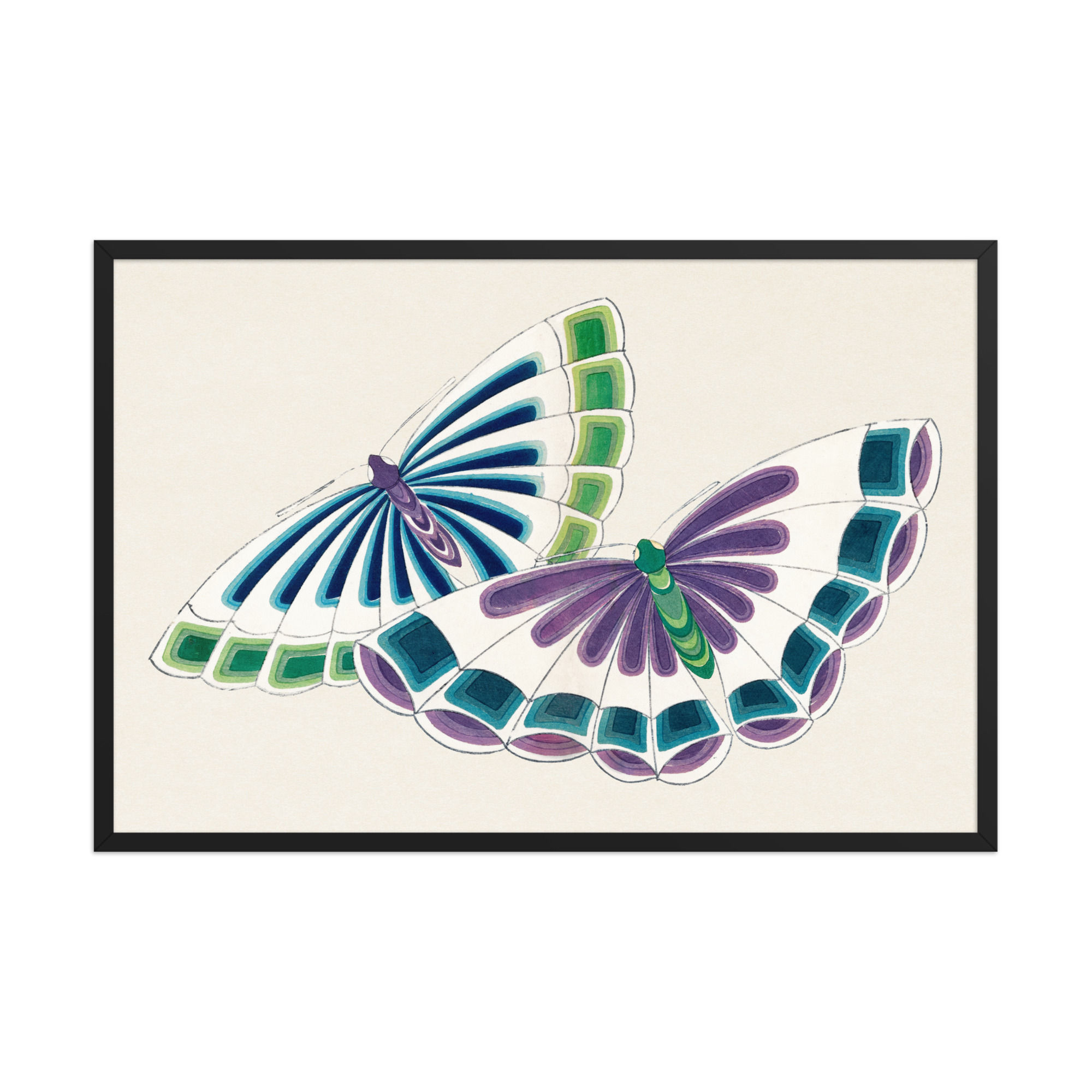

Japanese Butterfly by Kamisaka Sekka Framed Wall Art
A breathtaking display of early 20th-century Japanese masterwork, this print showcases a delicate, stylized butterfly inspired by the legendary Rinpa school pioneer Kamisaka Sekka. The composition features fluid, minimalist brushstrokes and soft mineral tones—glowing with muted golds, dusty blues, and earthy corals—set against a serene, textured background. This elegant, heritage visual style instantly creates a feeling of organic harmony and graceful movement, making it a spectacular piece of framed wall art for a refined bedroom, serene living area, or quiet reading corner.
This wall decor piece establishes a deeply tranquil, artistic, and meditative atmosphere that invites the gentle beauty of nature indoors. It is a flawless match for Japandi, mid-century modern, minimalist, or high-end bohemian interior designs that value clean lines and historical craftsmanship. Position this large wall art as a commanding focal point above a low-profile sideboard, or use its soft color palette to anchor a sophisticated, nature-inspired gallery wall. A decorator would choose this design to introduce a timeless, museum-quality aesthetic with a poetic, understated presence.
Perfect for art collectors, nature lovers, and enthusiasts of traditional Japanese woodblock aesthetics, this unique artwork brings a storied slice of art history into the modern home. Its standout feature is the effortless, abstract simplicity of the butterfly form. To tailor it to your space, select a black frame for a sharp graphic edge, a white frame for a light and airy minimalist look, or a warm wood frame to enrich its organic, traditional character.
A white border provides an unprinted margin around your image, creating a clean, framed appearance that mimics professional matting found in galleries and museums. This added space helps the eye settle on the art piece, enhances contrast with the surrounding wall or frame, and gives the piece a more polished, intentional presentation.
Including a border will reduce the visible area of the printed image slightly, since some of the art sits behind the unprinted edge, but the overall paper or sheet size remains the same. That means you retain standard dimensions for framing or display while achieving a restrained, elegant look. For anyone aiming for a minimalist, museum-quality aesthetic—whether for home décor, professional portfolios, or gallery displays—a white border is a simple, effective way to elevate the presentation.